Introduction to the piece
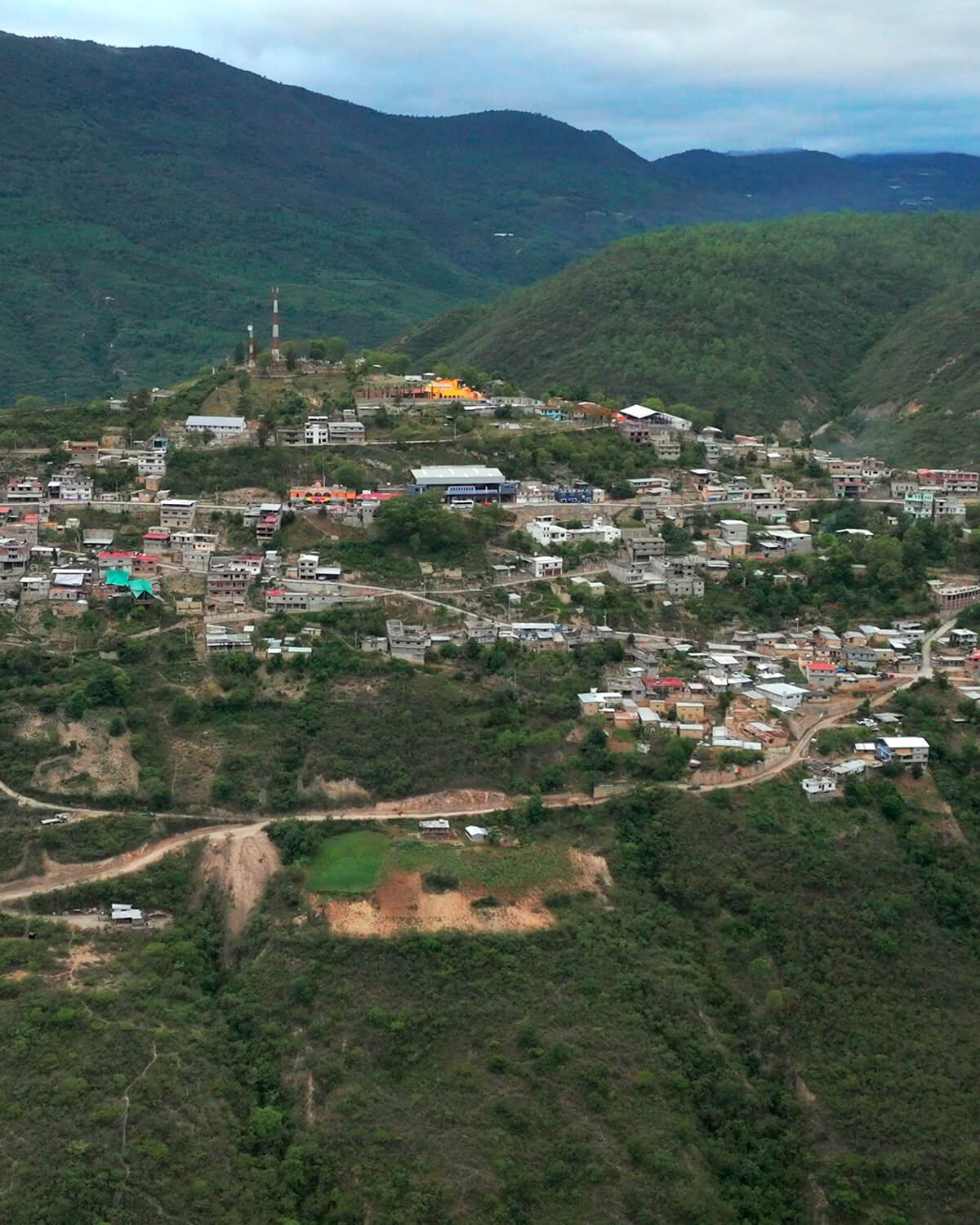
Upon returning to his native Teococuilco de Marcos Pérez after exhibiting in Europe, Alejandro Santiago did not find the lively village of his childhood, but silent streets and empty houses left behind by migratory exodus. Determined to heal that absence and give a voice back to his homeland, he chose to repopulate it through clay.
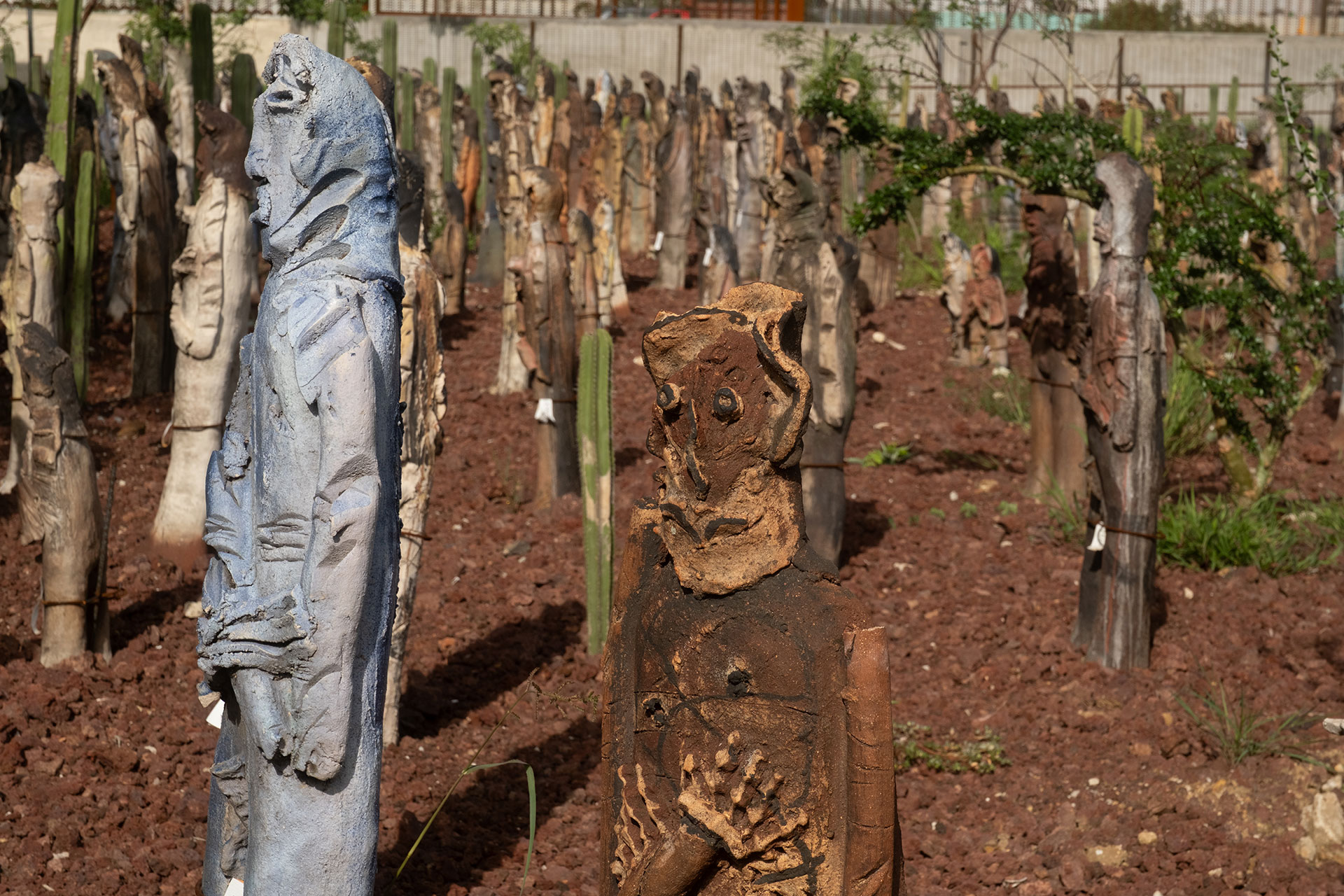
To capture the vulnerability of the journey truthfully, the master crossed the border undocumented in Tijuana. Upon his return, adhering to the tradition of tequio, he called upon more than 30 artisans to hand-model the bare clay effigies—a monumental effort spanning seven years of work, including technical preparation and material gathering starting in late 2001 until sculpting concluded in 2007. The quantity of sculptures reflects the estimated absences in the community and the crosses recorded on the northern border, while adding the number 2,501 signifies the ongoing nature of migration: there will always be one more.
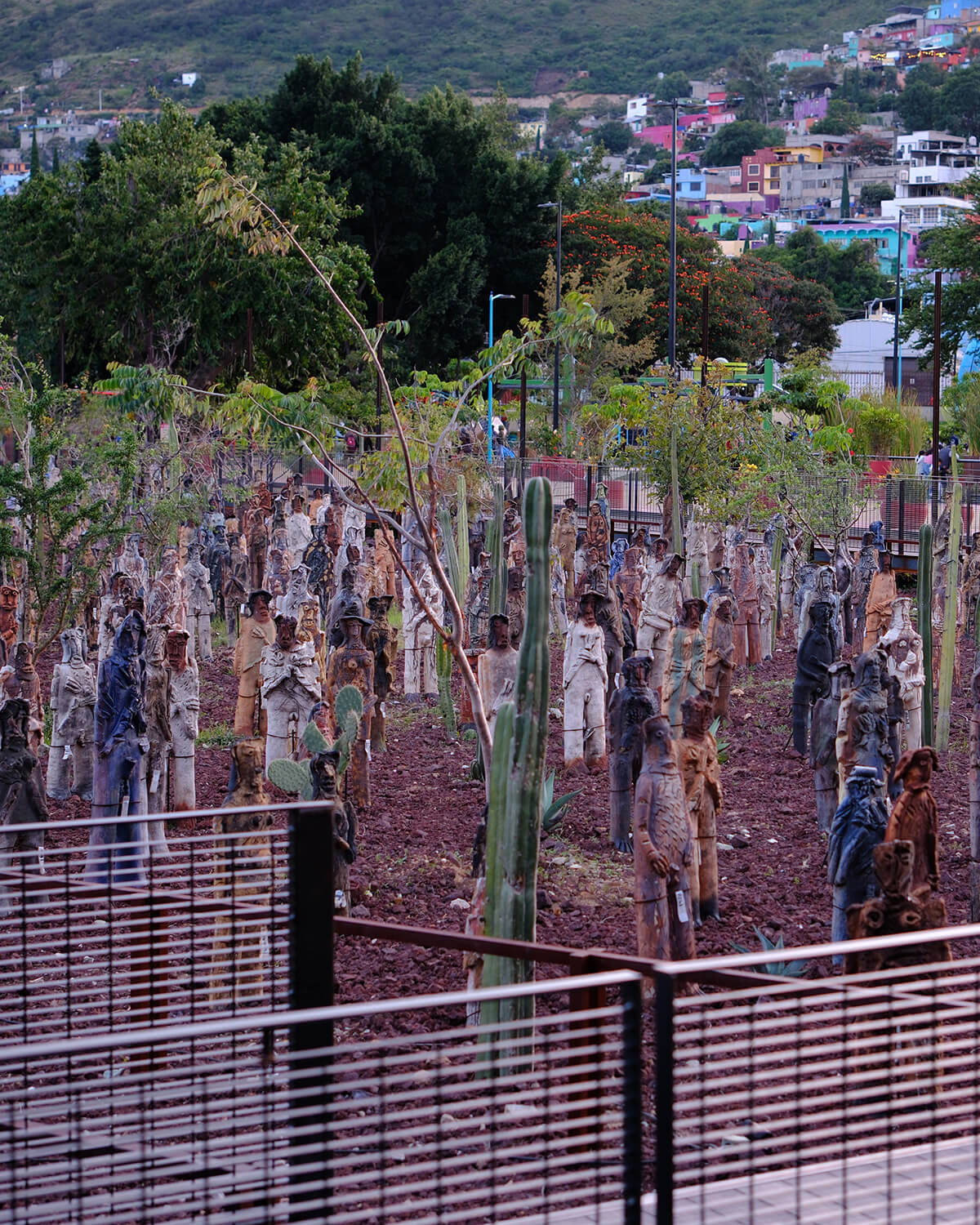
Today, after a pilgrimage across Mexico and the world, this monumental installation finds its permanent settlement in Cho Ndobá Oaxacan Spring Park. We invite you to walk through an open-air space where contemporary art, identity, and collective memory connect, allowing visitors worldwide to walk alongside a legacy reminding us that hope always returns home.
Immersive tour
The migrant route The migrant route
Station 1
The silent village
Alejandro Santiago was born on April 22, 1964, in Teococuilco de Marcos Pérez, a small town in the Sierra Norte region of Oaxaca. He spent his early childhood there, surrounded by dirt roads, community traditions, and the rhythms of village life.
At the age of nine, he migrated with his family to the city of Oaxaca, where he continued his education and began his artistic training. He later studied at the Rufino Tamayo Visual Arts Workshop and developed a career that would take him to live and work in different cities, including places in Europe.
In 2000, he returned to Oaxaca with his family. He visited Teococuilco, the place where he had been born and raised, and found a reality very different from the one he remembered.
Migration had profoundly transformed the community. Many people had left for the United States in search of better opportunities. Friends, neighbors, and relatives were gone. Houses stood empty, the streets had grown quiet, and the town seemed to have lost a large part of its population.
This encounter brought him face to face with an absence that was difficult to explain. Alejandro began to wonder where the people who had been part of his life had gone and what had become of them.
That reflection gave rise to an idea: to represent those who had left, symbolically restore their place in the community, and use art to make visible a reality that was not unique to Teococuilco, but one shared by many towns across Mexico.
Station 2
The promise of clay
For Alejandro Santiago, the idea of representing those who were absent gradually took shape and became a monumental project: to create thousands of human figures that would symbolically restore the presence of those who had migrated.
Choosing clay carried a special meaning. Oaxaca’s earth, its craft traditions, and the possibility of working directly with his hands offered the right material for giving form to this multitude.
Every figure would be different. The aim was not to produce identical objects, but to shape bodies that evoked real people: men, women, children, entire families, and older adults.
Clay could preserve the marks of handwork, the irregularities, and the distinctive features of each body. What began as a reflection on absence thus became an artistic proposition capable of restoring a sense of presence to thousands of people.
The intention was also deeply symbolic: to repopulate his hometown with those who had been forced to leave.
Station 3
The creator tequila
The creation of 2501 Migrants began around 2002 and became a collective undertaking that continued for several years.
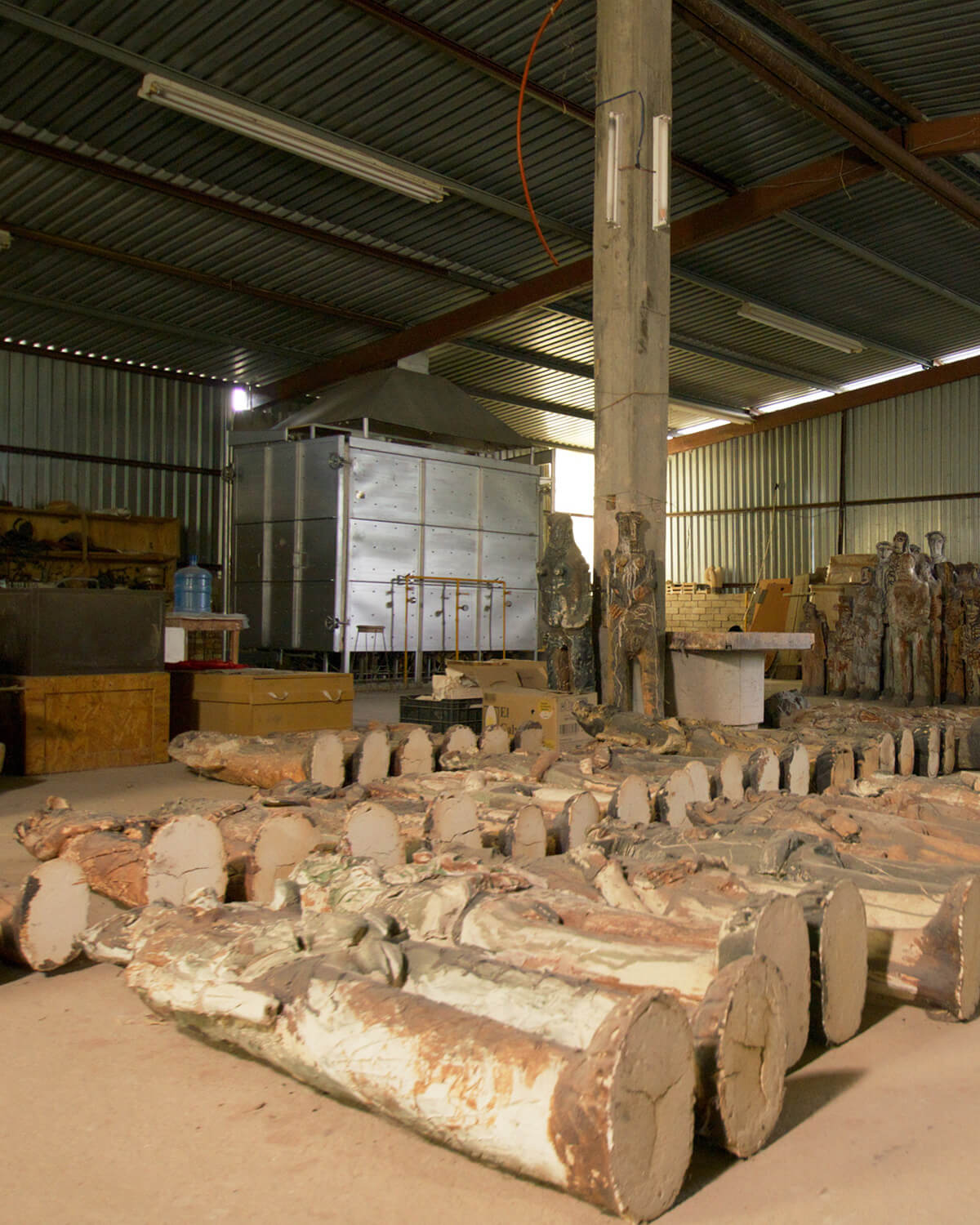
At Rancho El Zopilote, in Suchilquitongo, Oaxaca, Alejandro Santiago brought together more than thirty local artisans and collaborators. Together, they developed a production process that combined the artist’s vision with the community’s knowledge and craftsmanship.
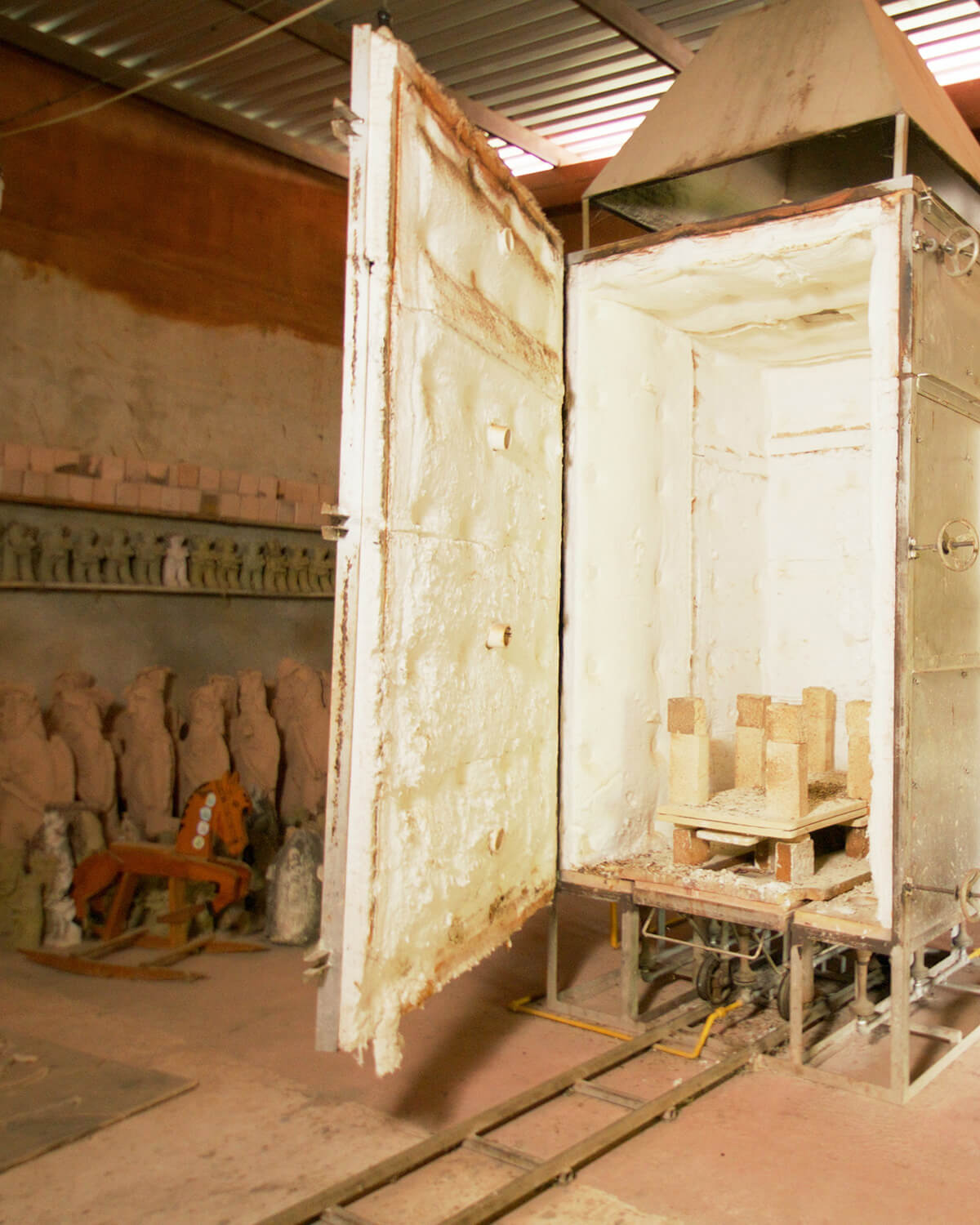
The project involved young people and members of his family. This was where the clay was kneaded, the bodies were shaped, the pieces prepared, and the kilns designed for firing. The pigments and finishes that would give each figure its own identity were also determined there.
The work was organized around the principle of tequio, a form of community collaboration deeply rooted in Oaxacan culture.
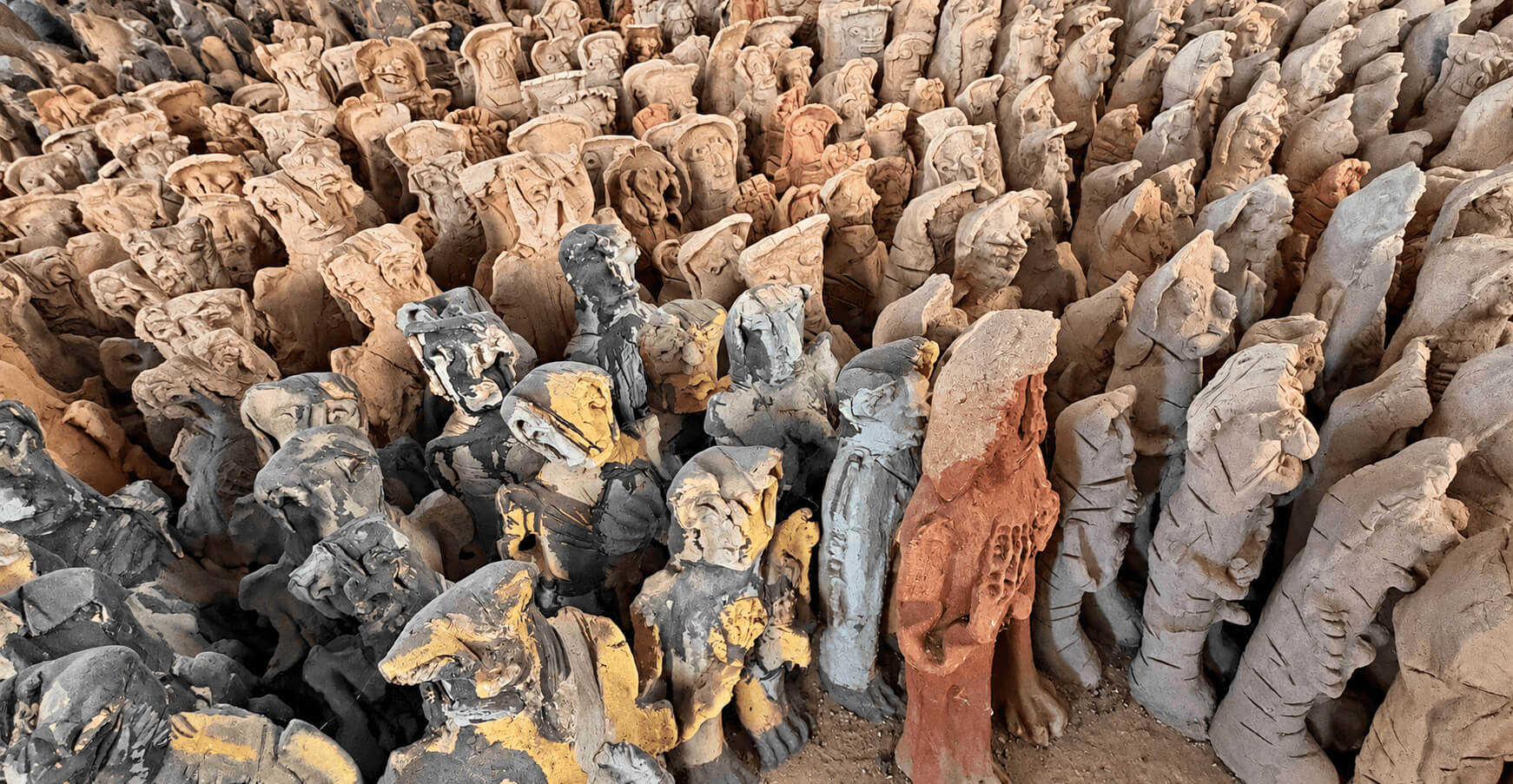
Over approximately six or seven years, the idea grew into a group of 2,501 anthropomorphic sculptures, each with its own features and expression.
It was a monumental work made not by one person alone, but by many hands united by a shared purpose.
Station 4
The journey in the desert
To better understand what people who had left their hometown were experiencing, Alejandro Santiago decided to approach migration firsthand.
He traveled to Tijuana, where he met people who facilitated migrants’ crossings into the United States. Accompanied by a guide who helped people cross the border, he undertook the journey and crossed into the United States as an undocumented migrant.
He wanted to experience the route taken by so many people from his community: the uncertainty, fear, exhaustion, and vulnerability of those who leave their homeland in search of an opportunity across the border.
During that journey, he encountered an image that would shape the meaning of his work: crosses placed in memory of people who had died trying to cross into the United States.
When he asked about them, he received an answer he would not forget: there were approximately 2,500.
That number connected two realities already present in his thoughts: the absence of people from his hometown and the lives lost along the migration route.
The experience gave his project an even deeper human and symbolic meaning.
Station 05
Echo of the desert
The desert is one of the most difficult parts of the migrant experience.
For those trying to reach the United States, crossing it means facing extreme temperatures, long distances, thirst, exhaustion, and dangers that can cost them their lives.
Alejandro Santiago wanted to come closer to this reality and understand what it means to walk without knowing whether the destination will ever be reached.
Pause for a moment, close your eyes, and listen.
The wind, the silence, and the surrounding sounds recreate the atmosphere of a journey in which every step demands endurance. It is a landscape where loneliness and uncertainty accompany those who risk everything in pursuit of a different life.
This space invites us to think of those who set out on that journey—and of those who never made it.
Station 06
There will always be one more
Why 2,501?
The number in the title of the work has a particular story. Alejandro Santiago remembered the size of his community and the approximately 2,500 inhabitants he associated with Teococuilco. When he returned, he found a town transformed by the absence of those who had migrated.
Later, during his experience at the Tijuana border, he encountered another number that would stay with him: the approximately 2,500 crosses placed in memory of people who had died trying to reach the United States.
Two different realities, connected by the same number: the people who had left their hometown and those who had lost their lives along the way.
Alejandro found in this coincidence a reason to make the number the central element of his work. He decided to create 2,500 figures and add one more.
That additional figure had a special meaning: there will always be one more migrant. Someone else who will have to leave, another family that will experience an absence, and another story to be added to those that came before.
For this reason, 2501 Migrants is not a closed count. It is a reminder that migration continues, and that behind every number there is a life, a family, and a story.
Station 07
Clay skin
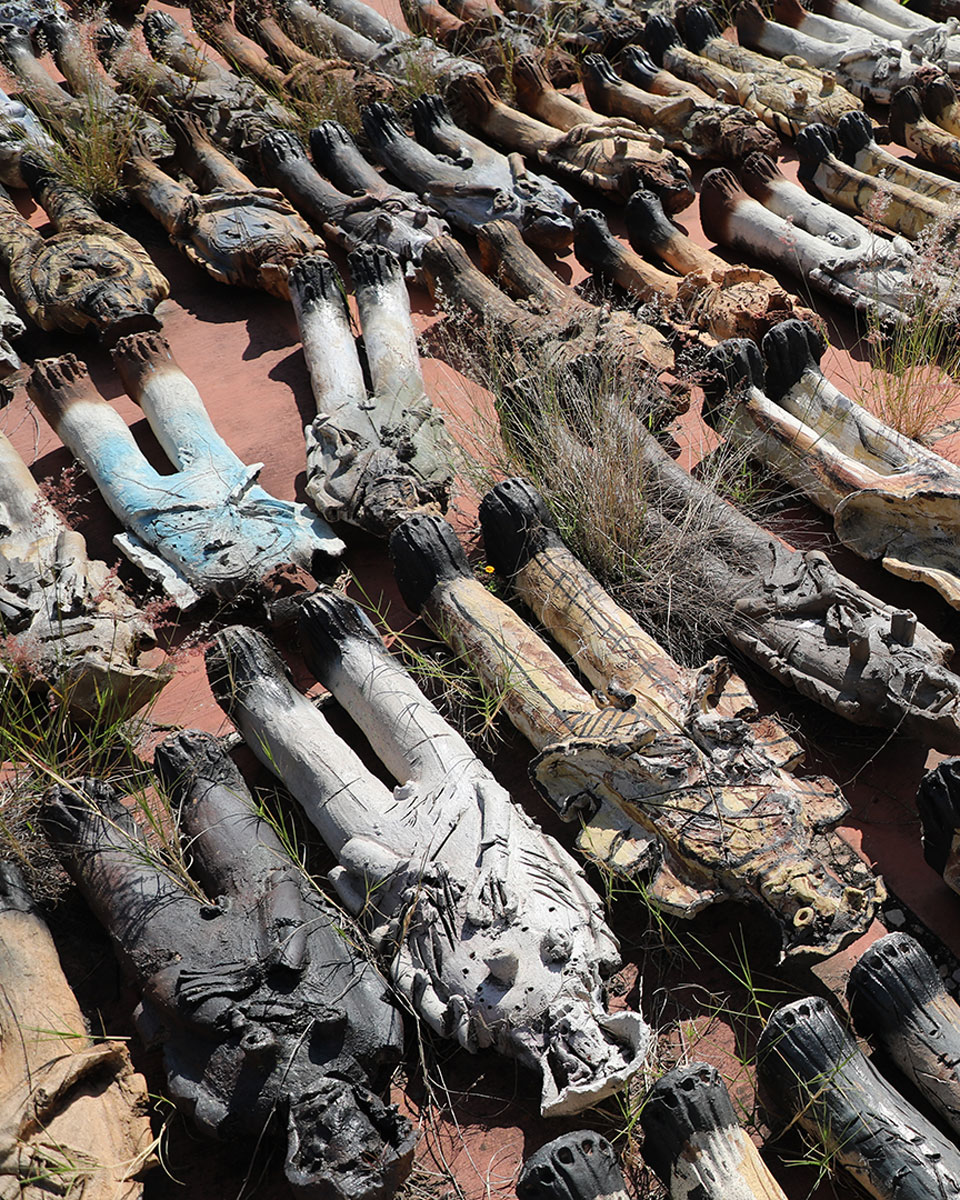
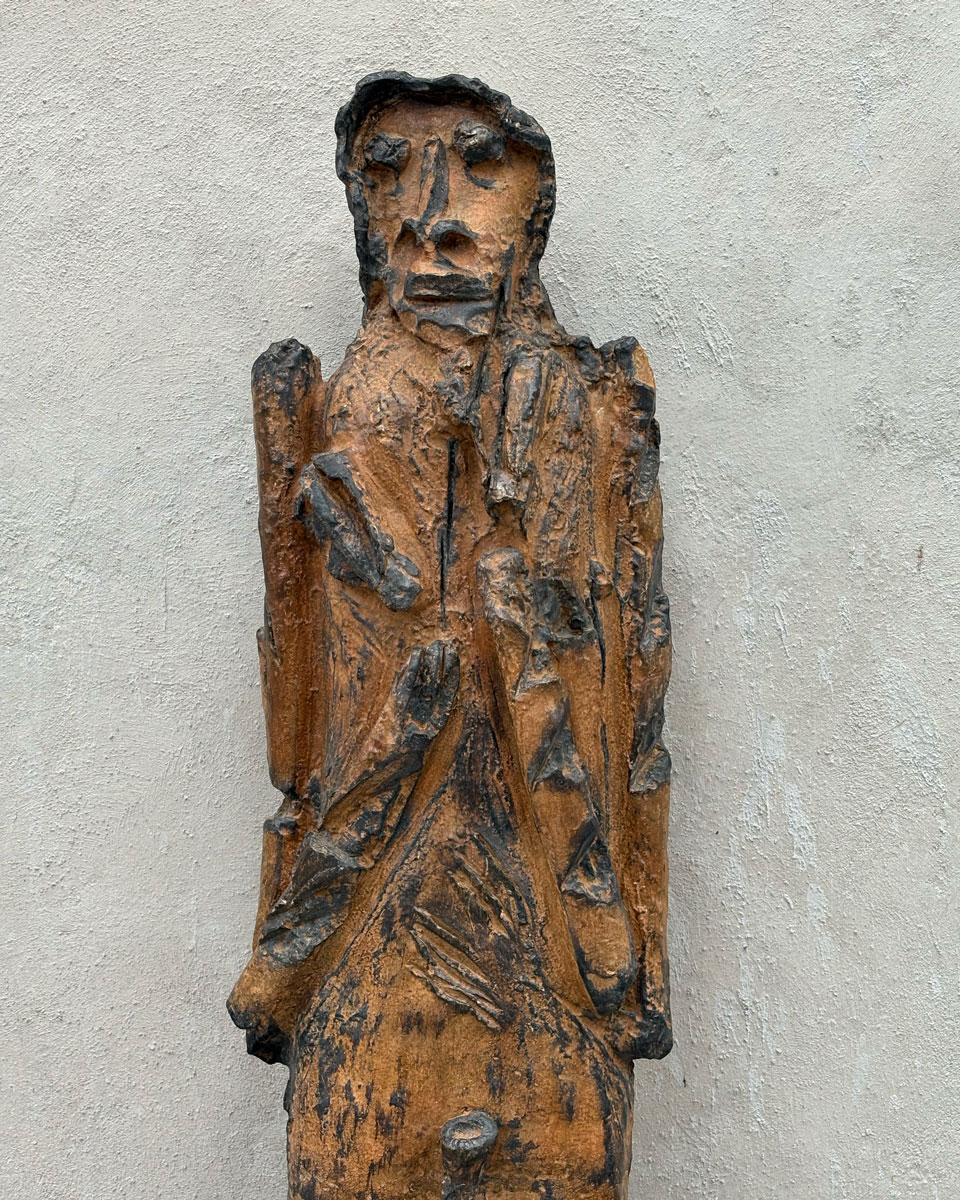
The 2,501 sculptures were made of clay and shaped by hand, without relying on industrial production that would make their forms uniform.
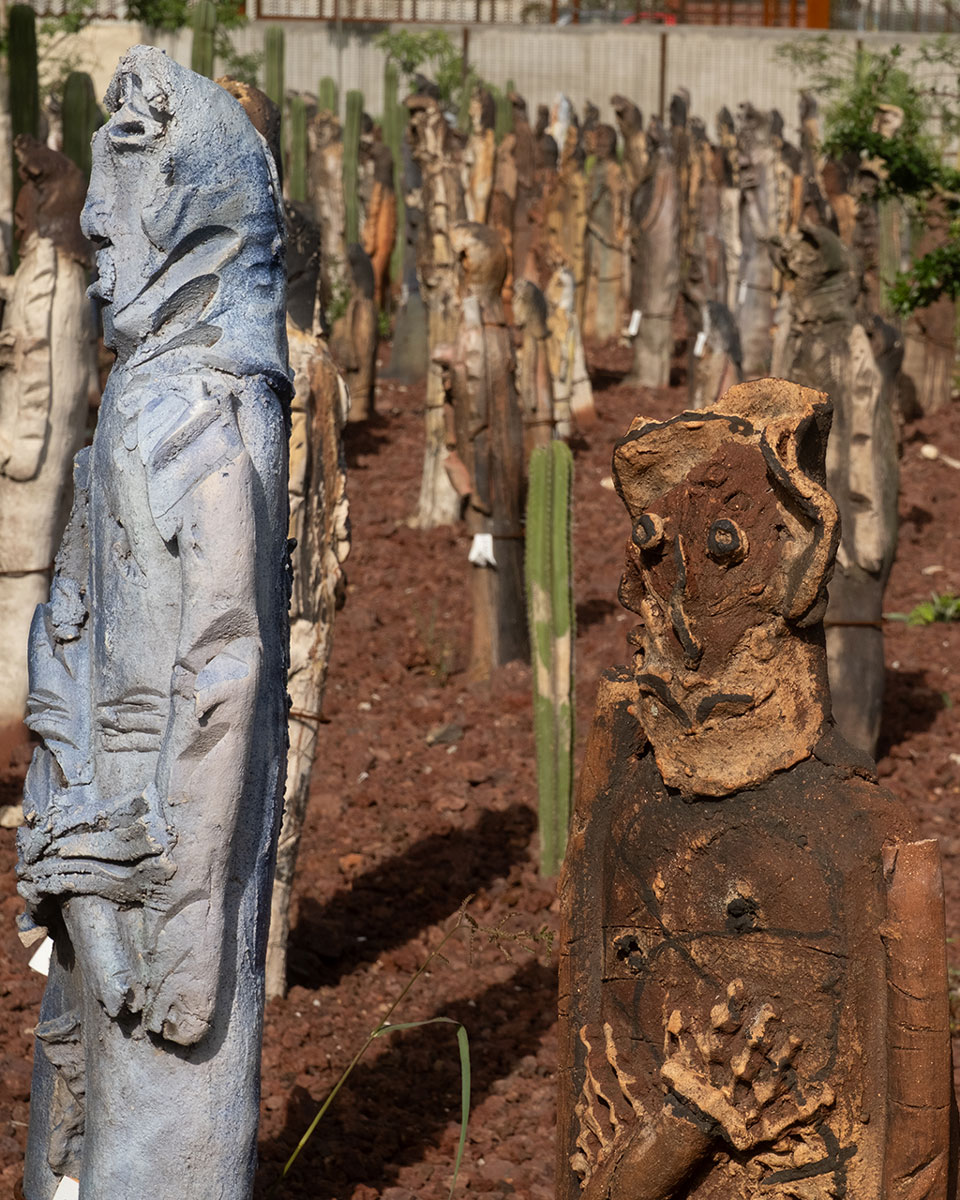
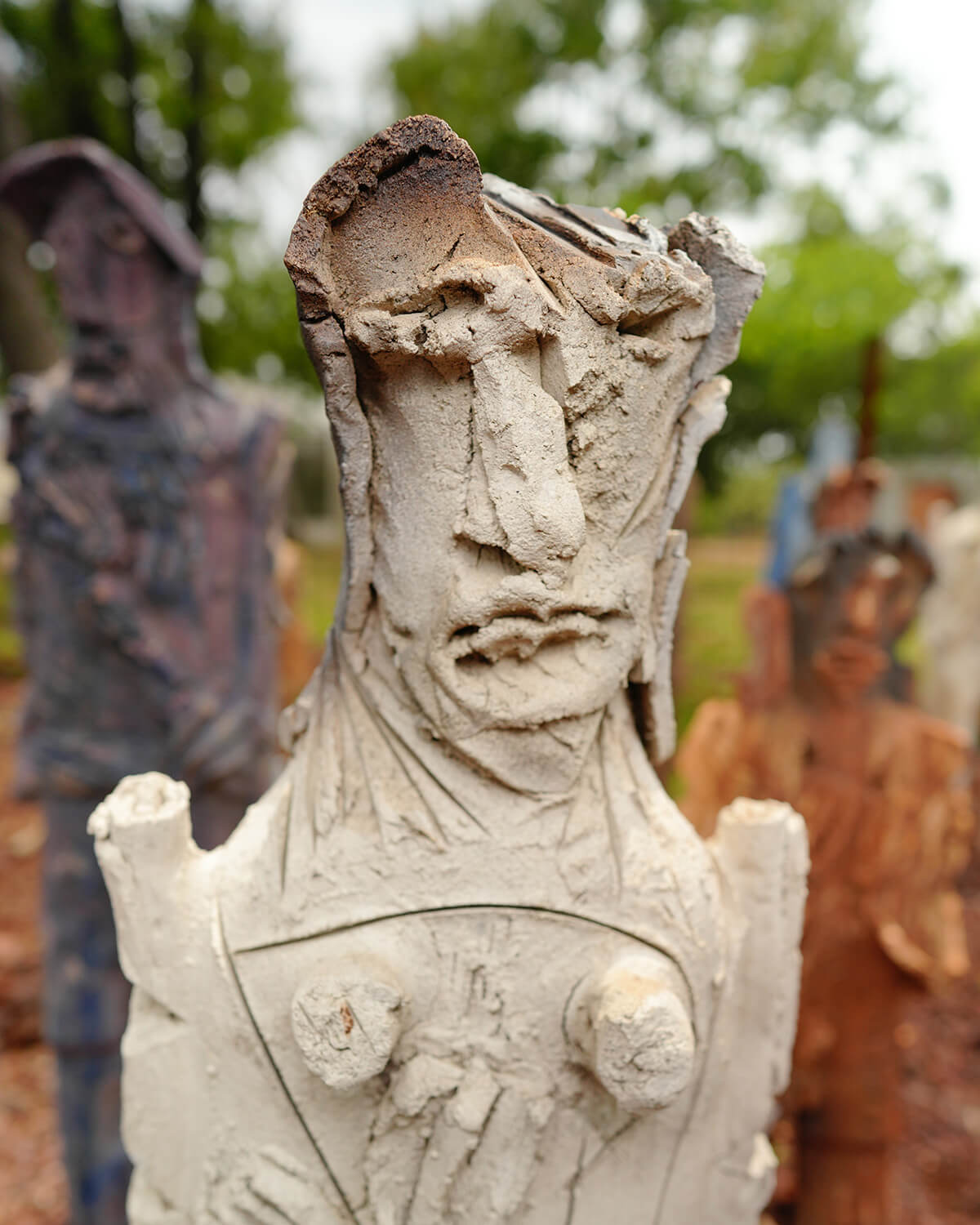
Each figure has its own features. Their surfaces preserve irregularities, marks, and textures that reveal the work of the hands that shaped them.
The bodies are unclothed, with their arms crossed over their chests and expressions that convey different emotions: fear, exhaustion, uncertainty, vulnerability, and hope.
These are not idealized figures. They are human representations that speak to the conditions faced by people who migrate.
Clay, as an earth-born material, takes on a symbolic dimension: it is the land left behind, the memory of a community, and the mark of those who have had to depart.
Each sculpture preserves something of that experience. Every body is different, yet all are part of the same collective story.
Station 08
The file of the faces
Come closer and look at the faces.
No two are exactly alike. Some expressions are calm; others show weariness, searching gazes, or different emotions.
The multitude created by Alejandro Santiago brings together children, young people, women, men, older adults, and entire families. Each figure has its own identity. They are presences that evoke those who left, as well as the people who stayed behind and waited for them.
Seen up close, the sculptures seem to hold individual stories. Viewed as a whole, they become a representation of migration as a collective experience.
It is an archive of absences, but also of lives, memories, and hopes.
Station 09
The monumental pilgrimage
The story of 2501 Migrants did not end when the sculptures were completed. The journey of the work itself became part of its history.
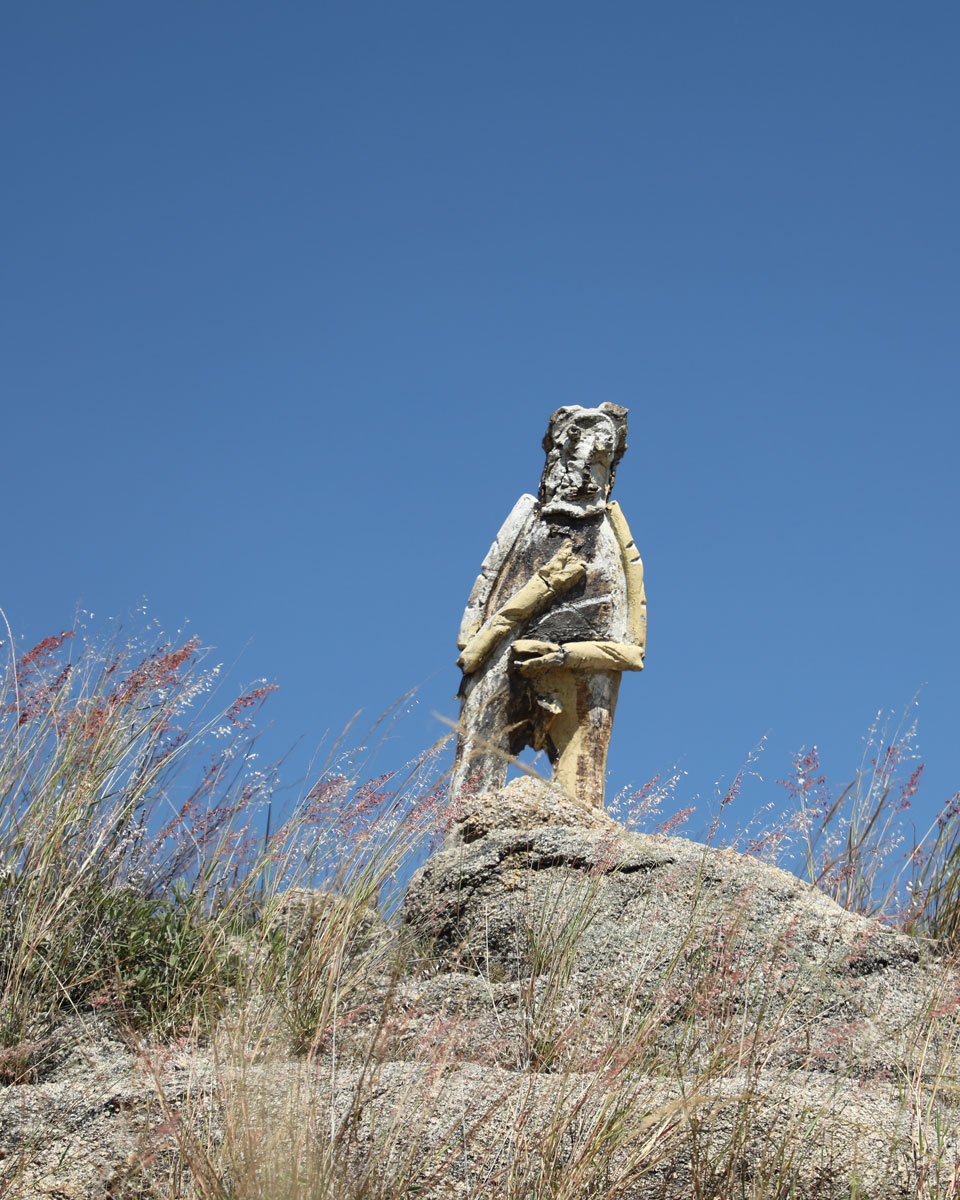
In 2007, during the Universal Forum of Cultures in Monterrey, all 2,501 figures were presented together for the first time at Fundidora Park. The exhibition brought thousands of visitors face to face with a multitude of sculptures representing absence, migration, and human displacement.
From then on, the work began traveling to different venues and cities. The figures were displayed at emblematic locations in Mexico, including Mexico City’s Zócalo, and crossed borders to be shown in the United States and Europe. Cities where the work has been presented include Los Angeles, San Francisco, Brussels, and Paris, as well as several cities in Italy.
In 2019, a selection of 501 sculptures was presented at the Antiguo Colegio de San Ildefonso in Mexico City, following the exhibition of other pieces at Hollywood Forever Cemetery in Los Angeles.
In this way, a work born from the absence felt in a small Oaxacan town carried its message to different corners of the world.
The sculptures set out on a journey of their own. Like the people they represent, they crossed territories, found new places, and told a story that reached far beyond their place of origin.
Station 10
Sowing the future
The journey of 2501 Migrants was also shaped by the absence of its creator.
On July 22, 2013, Alejandro Santiago died in the city of Oaxaca at the age of 49, following cardiac arrest.
His death came after the monumental presentation in Monterrey and before he could personally accompany the next stages of the international exhibition tour envisioned for the work.
Some of his artistic and cultural projects remained unfinished, but 2501 Migrants continued its journey.
Years later, following its exhibition at the Antiguo Colegio de San Ildefonso between 2019 and 2020, the pandemic interrupted the exhibition schedule. The sculptures returned to Oaxaca and were placed in storage at Rancho El Zopilote, in Suchilquitongo, near the place where they had been created.
There they remained in safekeeping, awaiting a new opportunity to be brought together and seen by the public again.
Station 11
The return home
The journey of 2501 Migrants entered a new chapter in Oaxaca.
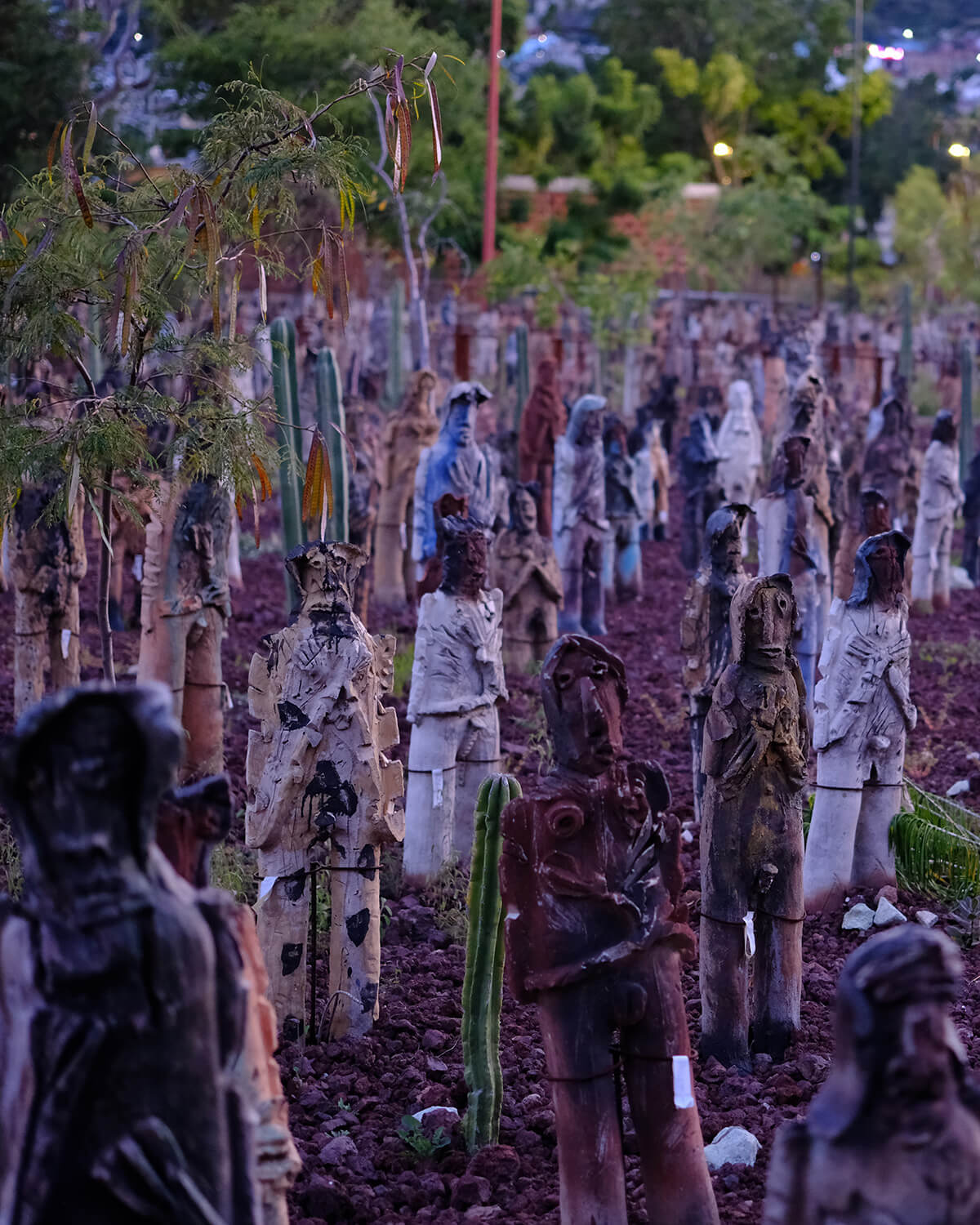
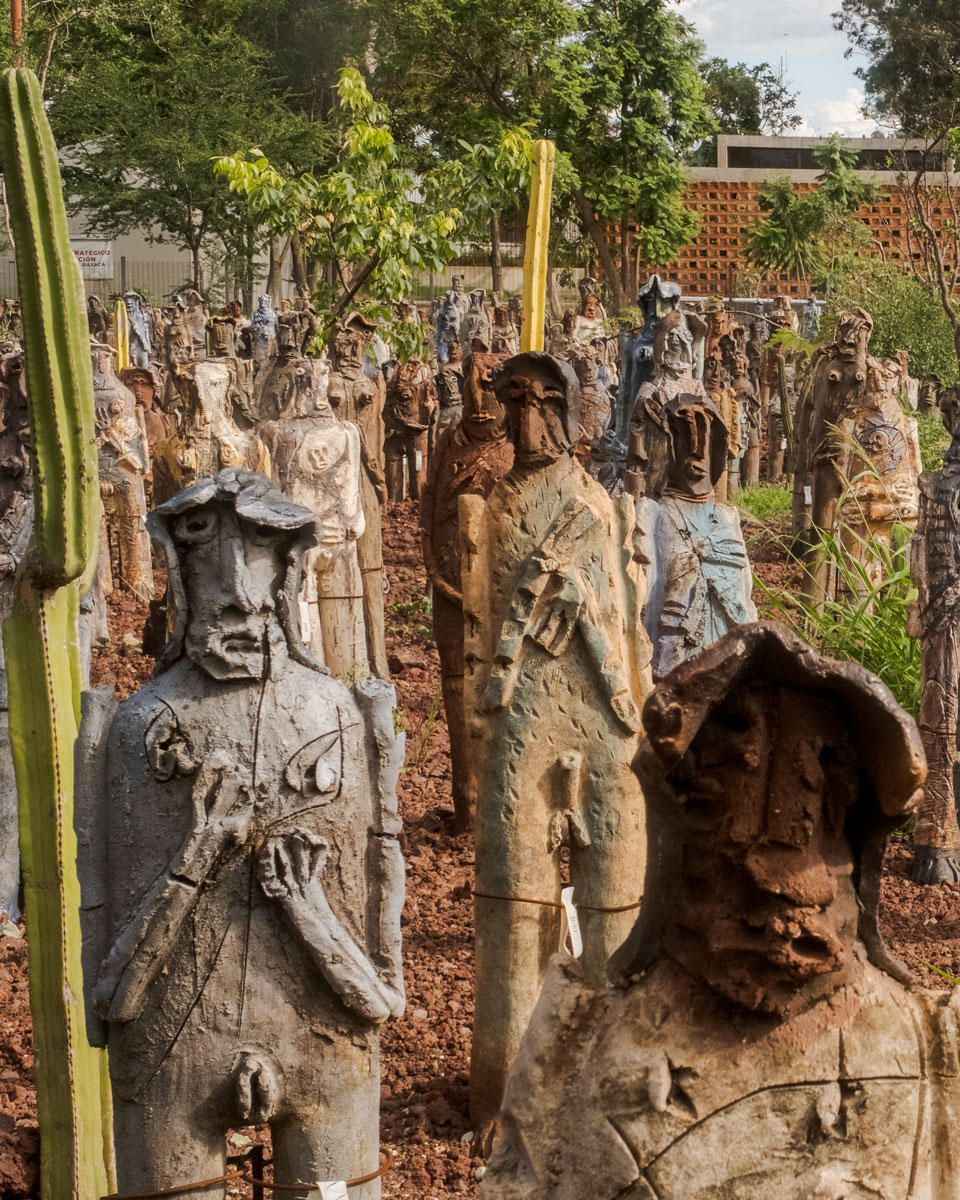
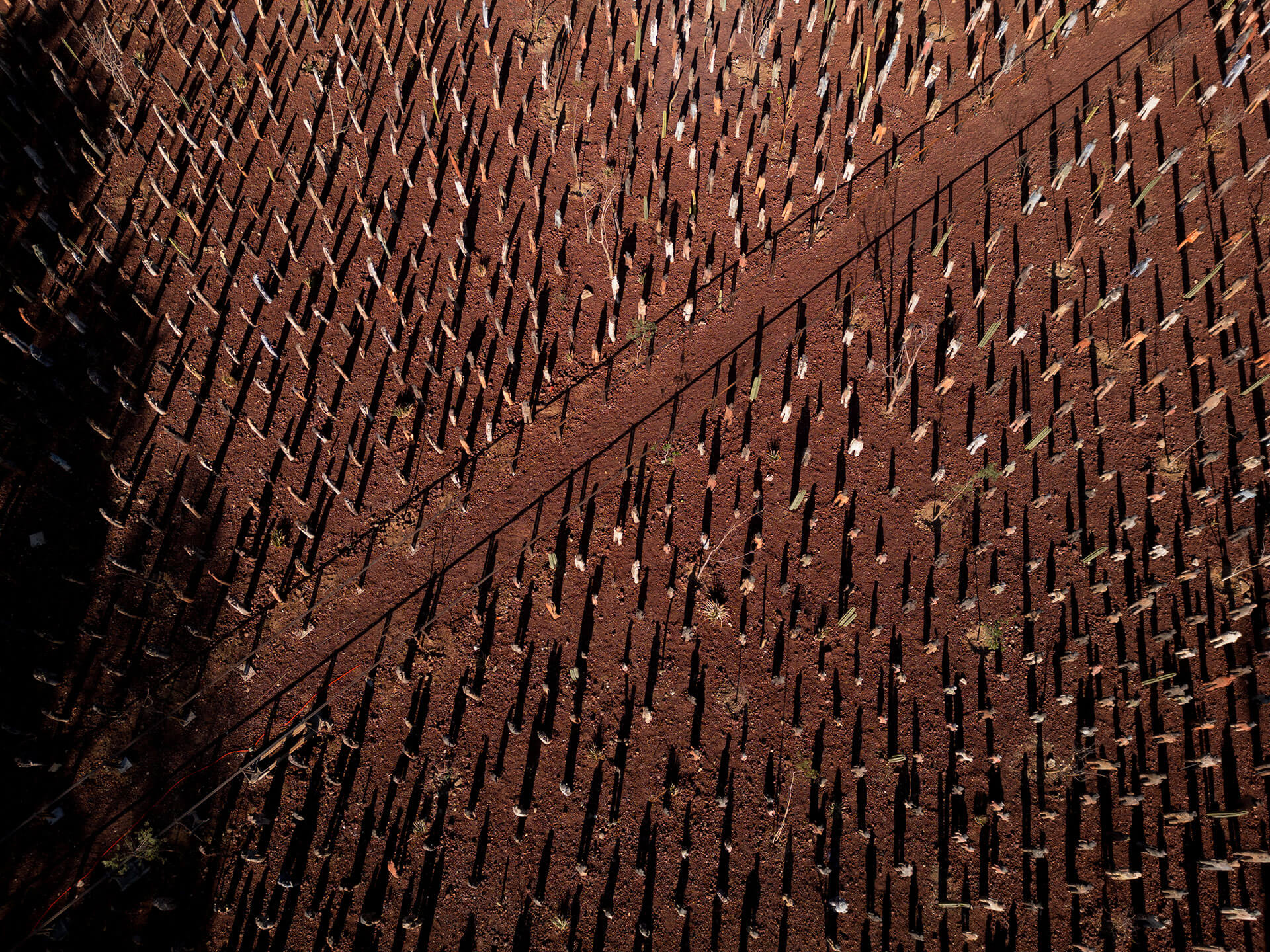
On December 15, 2024, the complete group arrived at Parque Primavera Oaxaqueña Cho Ndobá, an open public space where a dedicated area was created to permanently house the installation.
The location carries a special meaning. The park is next to the neighborhood where Alejandro Santiago had his studio and developed part of his artistic training—a place closely connected to the creator’s life and work. In this sense, the figures have found a place that can also be understood as a part of their own home.
All 2,501 sculptures are arranged facing north, toward the direction taken by generations of migrants from this region in search of opportunity.
After traveling thousands of kilometers and occupying venues in Mexico, the United States, and Europe, the figures have found a place in Oaxaca where they can remain together, meet the public, and continue sharing their creator’s dream.
This space invites visitors to observe, remember, and reflect on migration. Because migrating is not simply changing one’s location: it means leaving behind a home, a family, a language, and a part of one’s own story. It also means seeking opportunity, pursuing dreams, and often risking one’s life in the hope of finding a different future.
Alejandro Santiago transformed that experience into art. Through 2,501 figures, he left us a collective memory that continues to grow. The installation has found a place to remain, but the stories it represents are still on the move.